
Table of contents
The problem
Like a lot of people these days, I keep tinkering with all sorts of AI stuff. And I use it not only at work, but also for pure hobby projects. I genuinely want to share what I make, so that it might be useful to someone else. But I can’t shake the feeling that the more you lean on this Rube Goldberg machine, the less right you have to call the result yours. I don’t know. Maybe it’s just grumbling…
Either way, I feel much better about something I made with an LLM if I clearly mark it as such.
For example, on this blog you might have come across the AI translated tag:
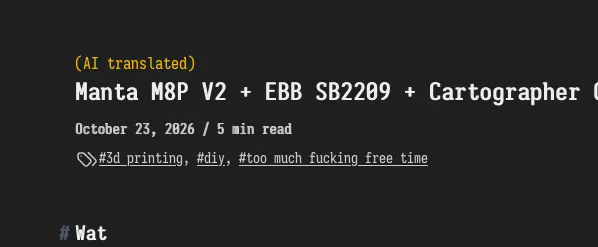
It’s pretty easy to do - it’s just one more field in the Astro collection that describes my post metadata:
// some fieldsai: z.boolean().default(false),// some other fieldsClaude has a skill that handles translations, and it explicitly tells the agent to set this field for the other language.
Sure, I could write the English text myself, it’s not a big deal. It’s mostly laziness… Or maybe it’s just a task that LLMs handle pretty decently.
But what about my other skill? The one that proofreads posts and suggests edits (spelling, word choice, style). Most of the time I just skim the report and say something like “apply the main ones, except lines 45 and 89, and remember to do X”. Then the agent goes through and applies them. That’s why some not-so-old posts might even contain em dashes (oh god). And the really old, pre-Claude posts have some pretty silly typos.
So what do I do in that case?
What about software I want to promote and write about, but that’s vibe-coded?
What about Linux? It accepts LLM-assisted commits.
I decided to look into how people are tackling this, so I can eventually pick what works best for me.
I won’t cover things like watermarks or digital signatures here. They’re too complex for my use case, and honestly I’m more interested in honor-system approaches. For now, that seems like the most reliable of the unreliable options.
Labeling
The problem is pretty new, so there are no set-in-stone solutions yet. Everyone improvises as best they can. At least the YouTubes and Instagrams of the world try to add notices along the lines of “this is AI-generated, be careful”. I won’t talk about those here. I was more interested in icons and symbols. They kind of look professional.
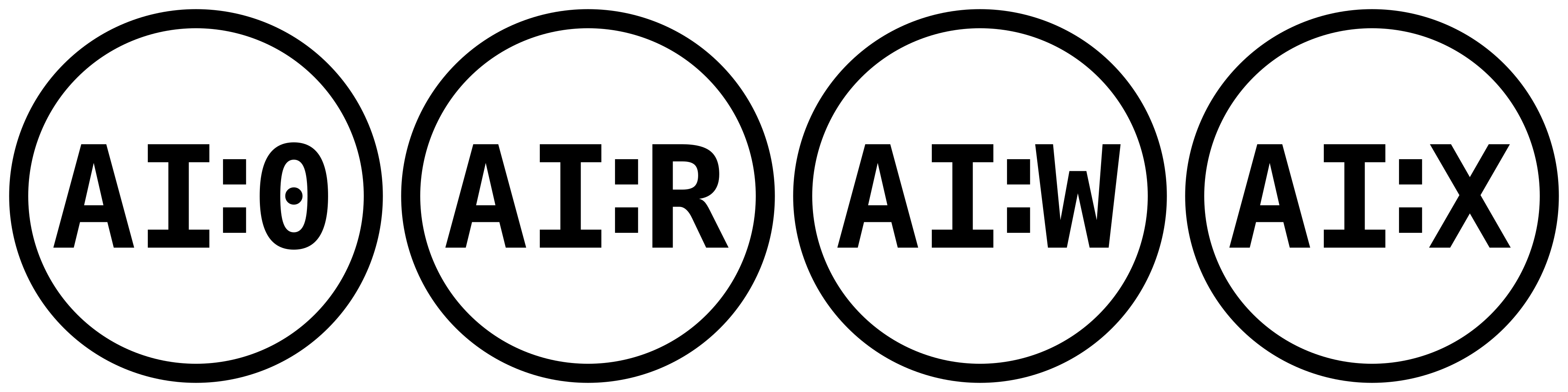
0RWX
Light version:
Dark version:

A YouTuber I really respect, whose videos about Rust I used to love watching. He came up with a whole framework for labeling AI content. I absolutely love his delivery, and this video was a big inspiration for this post. It also explains, briefly but precisely, why this matters.
He proposes four levels to describe how AI was used in a given case. The syntax is borrowed from Linux file permissions, which makes the framework intuitive for anyone in IT.
Even though it clearly comes from IT and programming, the framework maps pretty well onto more creative fields too, be it drawing or generating songs.
AI:0
AI can’t read anything or take part in the work at all. A human reads the docs, draws, and plays instruments on their own.
This is the option for purists, or for cases where you want to be sure a real person is accountable.
AI:R
AI has read-only access. For example, generating a bunch of images for inspiration, or asking GPT for a couple of synonyms.
To me, this fits my proofreading use case well - AI only does a purely routine, non-creative job. If I go with this framework, this is the level I’ll put on most posts.
AI:W
AI has write access. You generate chunks of code, review them, and then either finish them yourself or send them back to be finished. But don’t forget Mitchell Hashimoto’s ultimate flex:
I read the code
This is the level I’d use for posts I have the agent translate. Yes, I proofread them, but I can still miss things.
AI:X
The human doesn’t really understand what’s going on. Vibe coding. Generated videos and songs. Look, it can be fun, but it feels like all the cool stuff stays one level below. Honestly, I’d rather not slide into this. Although who am I kidding - I’ve played around with it too.
European Union
Dark version:

Light version:

Yes, you read that right. As of August 2, 2026, new rules on labeling AI content are in force in the European Union. Ignoring them can get you some hefty fines. These rules are most likely the reason big companies started labeling content in the first place.
At the time of writing, the rules mostly target deepfakes and news outlets, but who knows, they might come in handy for someone else too.
The icons themselves are optional. The site has a lot of legal text, and I won’t try to summarize it, let alone interpret it. I’ll just go over what’s there and how I understand it.
AI
For whenever AI is involved somewhere, somehow. It’s meant as a label that comes with a description of how and why AI was used. In theory, I could just extend my ai field’s schema and add a description field to it. And that’s it, I’d be mostly compliant with the EU rules.
AI Generated
Fully generated content, possibly without any human editing. Deepfakes, generated media and so on. Not my case.
AI Modified
This one goes on existing content that was modified or partially altered with AI. My AI proofreading might fall under this, but honestly, I doubt it. Funny thing: strictly speaking, in Europe this should go on every game mod that lets you skateboard around Skyrim.
ailabels

A framework I stumbled upon while digging into this whole topic. I don’t know the author or their startup. But the idea is pretty interesting. These labels remind me of the PEGI ratings on game boxes.
What I liked most is the idea of putting usage details right inside the label itself.
Made by humans
Clear and simple. Humans make things, no neural networks involved. Period.
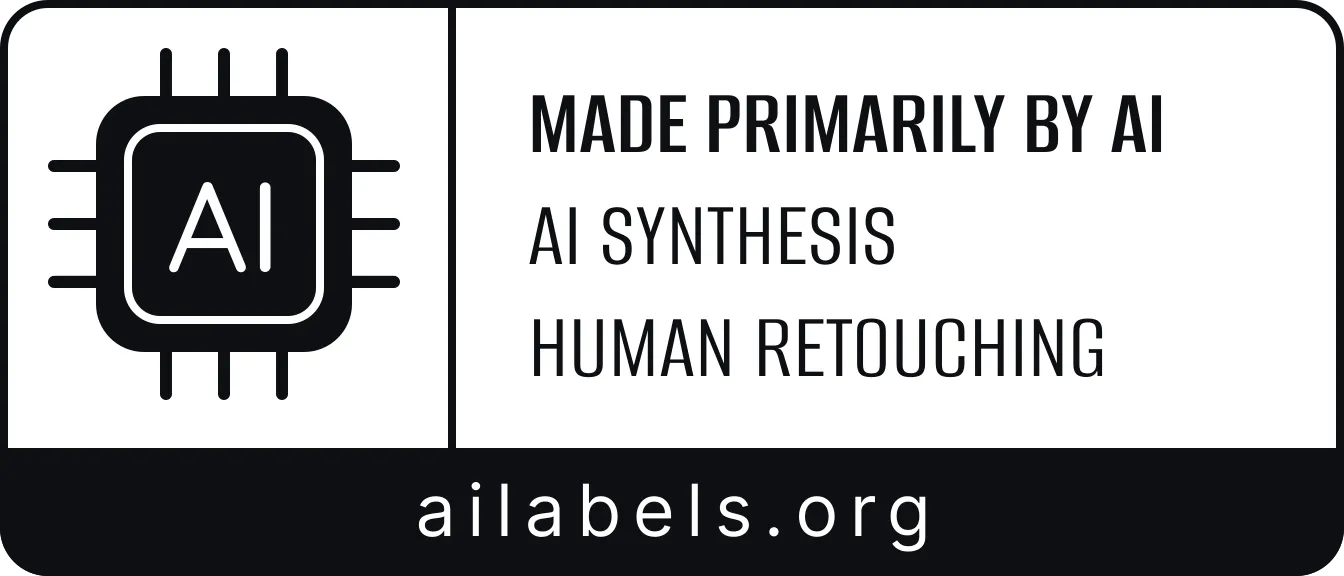
Made primarily by AI
Anything where an LLM did most of the work instead of a human should get this label. So vibe coding or prompt engineering belongs at this level.
You can also note who was responsible for what:
Made by humans with AI
This is the middle ground between the first two, where both made a significant contribution. Here, too, you can spell out who did what.
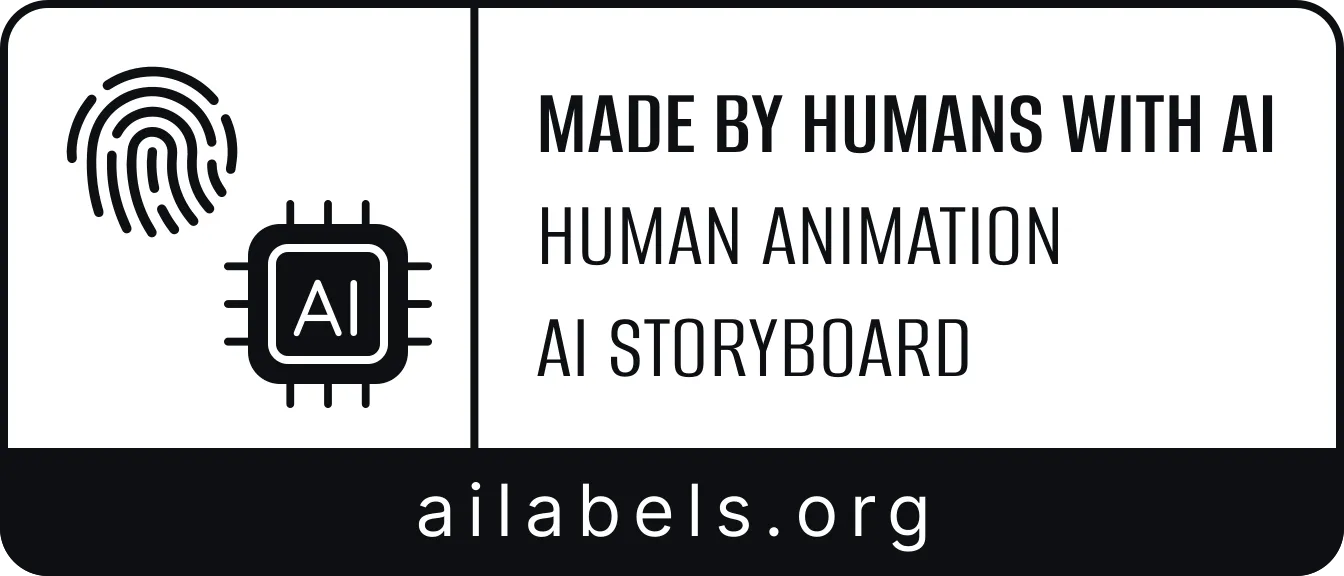
If I went with this option, I’d prepare several versions upfront - one for each use case, be it translation or proofreading - and drop in the right one.
AI Label
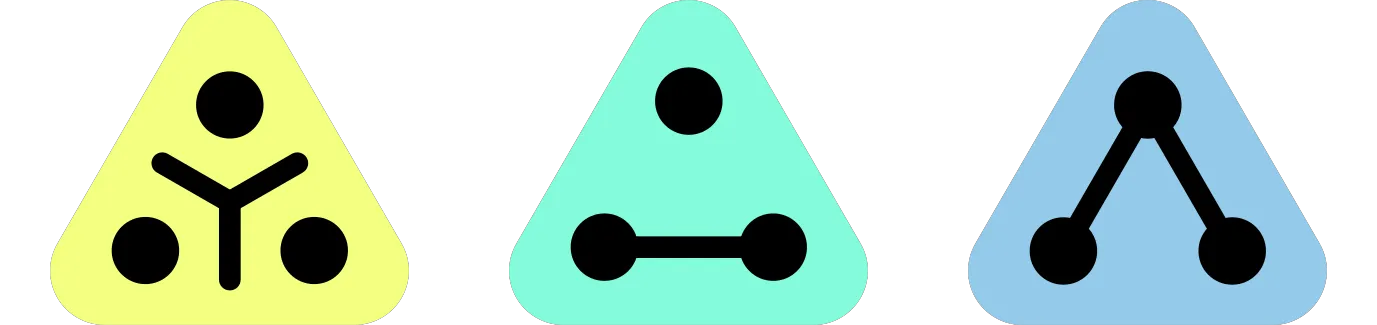
I also came across this project by accident while searching.
This one is made by graphic designers, so to my taste it looks really cool and futuristic, but also way too cryptic.
Can you guess what each symbol means? My wife said, and I quote, “power outlets”.
But they thought of that too. There are versions of the same symbols with captions that explain the meaning. You can also use the symbols without a background, just black on white (or white on black).
No AI used
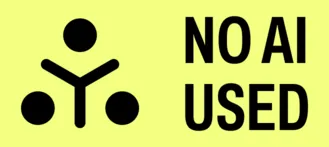
That’s way better. It’s immediately clear that the content was made without AI in any form.
The explanation of the symbolism is pretty interesting, though. You can see a little person in it, and at the same time it looks like a top-down view of three people sitting together at a table working on something.
Assisted by AI
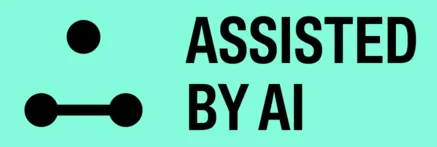
The symbolism here is much harder for me to see: there’s some kind of foundation that the human work is built on. And the circle on top stands for “work in progress”, whatever that means.
As the caption suggests, this is for anything you make hand in hand with AI.
Made with AI
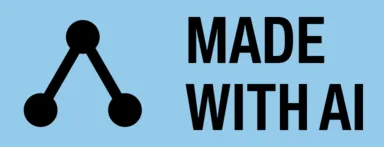
This one is simple too - vibe-coded it, put this symbol on it. I’d probably use it for posts that are fully translated.
The symbolism here is also well thought out, to my taste: from a distance, the connected dots look like the letter A for “Artificial”. And the triangle feels like a warning that the work was done entirely by AI.
AI use levels
Light version of the symbols:

Dark version of the symbols:

This framework goes beyond symbols. It has a whole notation for describing what was done and how:
<level> [hand] [door] [flag] [(<tool>)] [v<major>]The symbols above are simply the levels of AI involvement (left to right):
-
L0 - No AI
-
L1 - AI suggested
-
L2 - AI under control
-
L3 - AI without control
The author muses that the symbols could eventually make it into Unicode, so you could just type them.
For my posts, it would work like this: the L1 symbol goes next to the title. Then, right beside it (or in the image alt text), I describe the details according to the framework:
L1 touched Claude Opus 5.5It looks a bit complicated, but it might work for someone.
In plain words
Nothing stops you from simply labeling everything in plain words. I really liked how it was done on this blog, for example:
You can write it anywhere, in any form, about anything. It even feels more human somehow.
Wrapping up
We’re still in the Wild West days of AI content and AI-assisted work. There are no complete solutions or established approaches. You’re free to choose what to label, where and how (except where it’s already mandatory).
As always, it all comes down to honesty. If someone wants to pass off an LLM’s work as their own, it’ll be hard to catch, sometimes even impossible. So let’s just be more honest. When has that ever hurt?
As for me, I’ll keep thinking about which of these to pick. Which one did you like best? Let me know if you find any other interesting options.
Take care of yourself and your loved ones!